
Quick Answer
Route the drill beam through Pingosius crystalis, rupium, then catonymus. Choose the exact specimens by shape, including the blue Pingosius with upward-facing rounded growths, before directing the beam into the central drill. In We Were Here Tomorrow's Particle Accelerator, the earlier laser section instead needs a continuous beam through the blue sensors on both sides.
This puzzle is in the Particle Accelerator chapter. Complete the earlier blue-sensor laser section before tackling the main crystal drill.
How do you solve the Particle accelerator laser section?
Pass the beam between you and your partner so it crosses the blue sensors without breaking the connections behind it.
- Place the available optical pieces to receive the incoming beam and send it across to your partner.
- Connect the middle of the route before aiming at the last sensors. Jumping straight to the end leaves that middle connection missing.
- Keep the working earlier pieces in place while you adjust the final movable base. Removing an upstream piece cuts off the beam farther along.
- Once the blue lights are lit, move the final base into position and push it inward to finish the route and open the way.
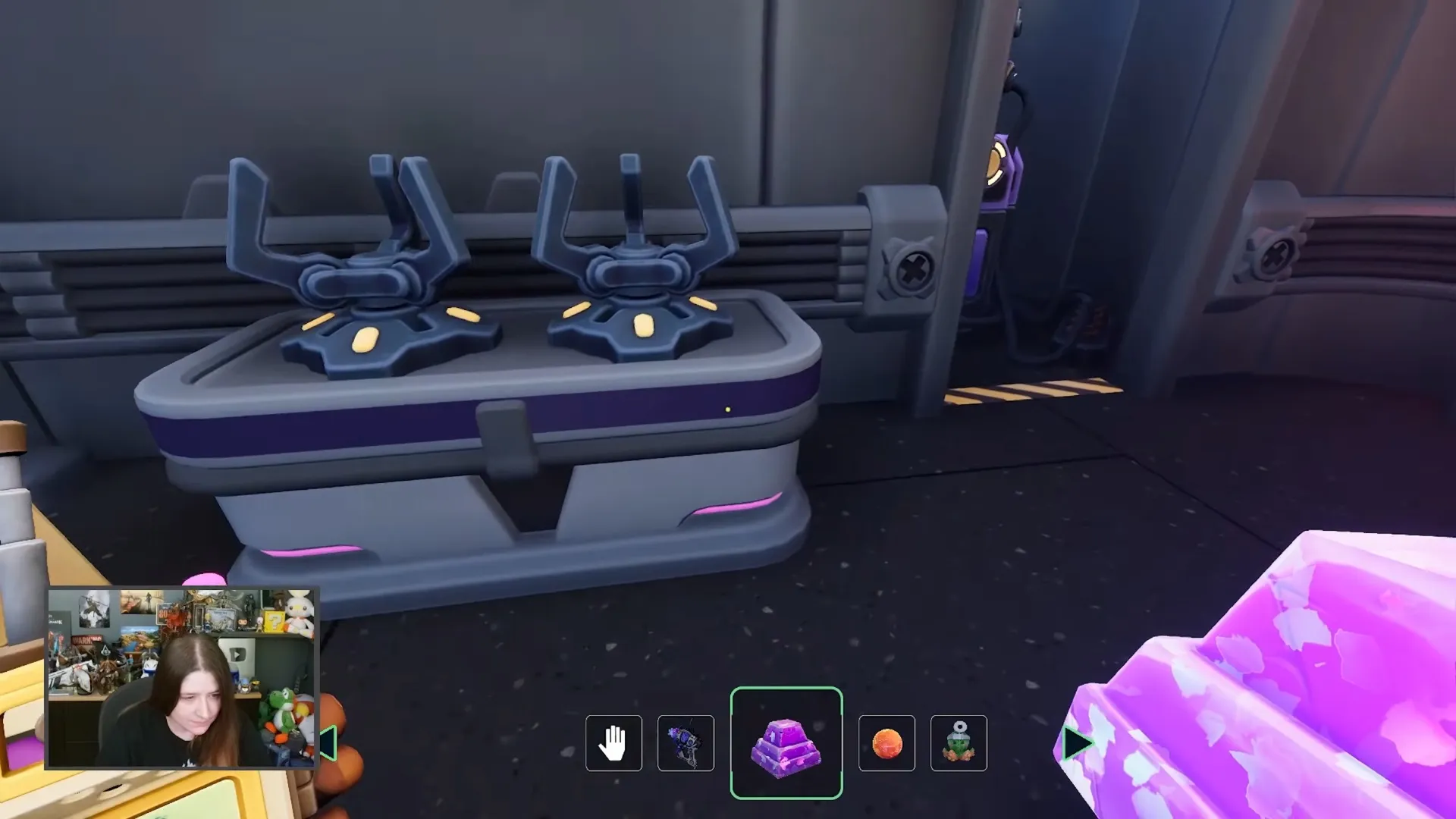
An active laser runs through the crystal puzzle area.
Shown at 102:48 in Morrigh4n’s video.The crystal fixed to the movable base cannot be collected. Move the base rather than trying to take its crystal for another position.
Where is the hidden pyramid for the green beam?
Look behind the crystal arrangement for the pyramid that redirects the green beam onward.
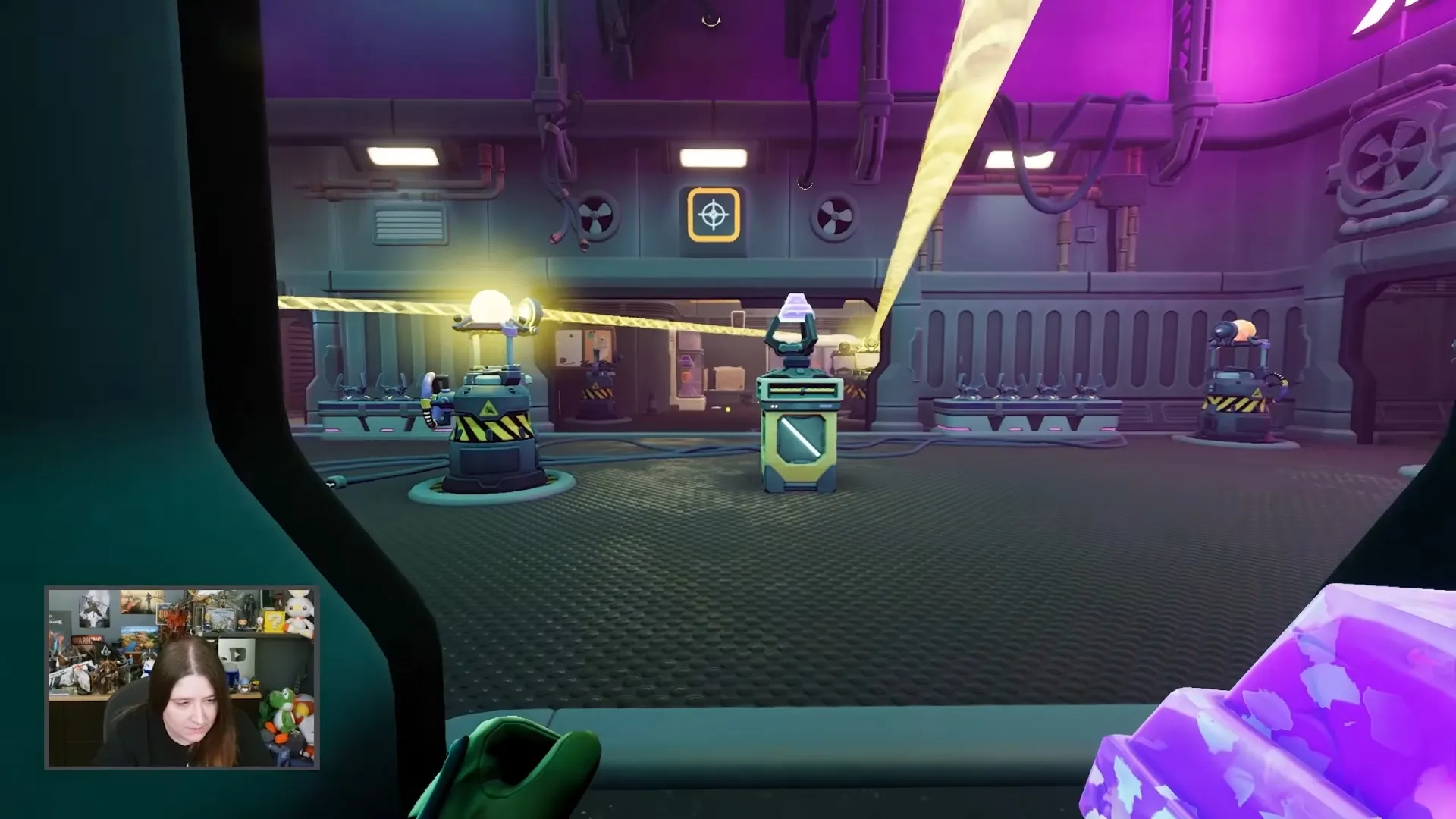
The pyramid sits behind the crystals and turns the green beam along the route.
Shown at 128:15 in Morrigh4n’s video.- Send the blue beam through the glass to reach the plant-filled room.
- Check behind the crystal arrangement for the pyramid.
- Redirect the green beam with that pyramid to continue the connection.
If the green route seems impossible, check this spot before rearranging the rest of your setup. Missing the pyramid leaves you overlooking a piece of the route you can actually use.
What is the Particle accelerator crystal configuration?
The required order is Pingosius crystalis → rupium → catonymus, followed by the central laser drill.
Combine the ordering verse with the mineral descriptions. The verse gives you the sequence of properties; the descriptions tell you which mineral fits each property.
| Verse clue | Crystal |
|---|---|
| Mirror and reflection first | Pingosius crystalis |
| Serene stone and stabilization next | rupium |
| Ardent heart and strongest heating last | catonymus |
- Identify Pingosius crystalis using the reflection clue and the shape chart.
- Route the beam through rupium, the tranquility gem with a stabilizing effect.
- Send it through catonymus, the heating crystal described as having an internal fire.
- Aim the resulting beam into the central drill.
The Particle accelerator laser drill needs the correct specimens in that order. Lighting the blue sensors was the earlier task; it does not replace the drill's crystal configuration.
A matching beam color does not mean you have the right specimen. If the drill reports an incorrect crystal configuration, compare the actual shapes with the chart as well as checking the order. This puzzle belongs to the Particle Accelerator; the Master Emitter crystal configuration is a separate puzzle.
Which Particle accelerator Pingosius crystalis should you choose?
Choose the blue specimen whose rounded growths point upward, rather than the inverted specimen with downward-facing growths.
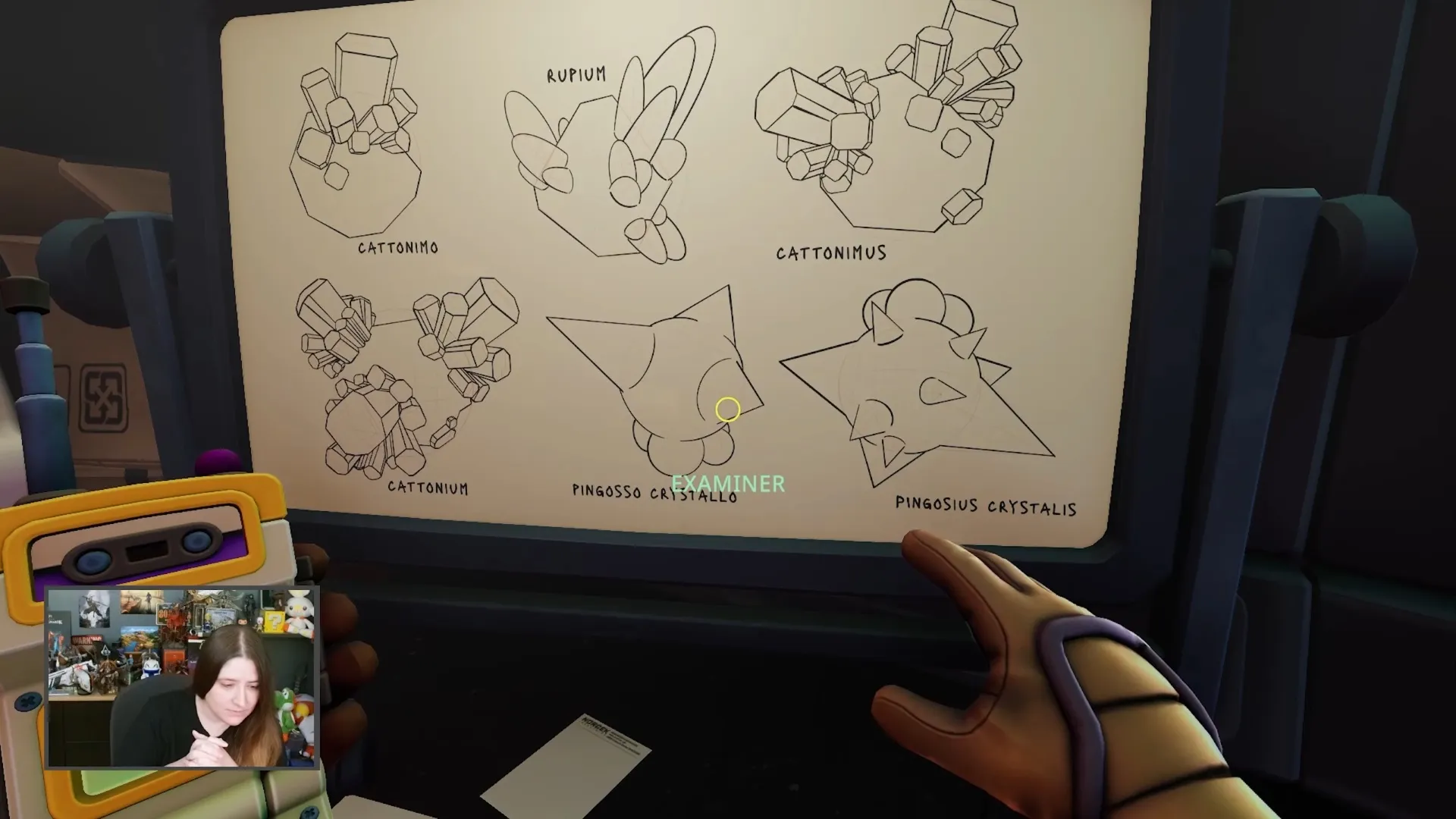
The blue Pingosius crystal has rounded growths facing upward.
Shown at 147:03 in Morrigh4n’s video.Have your partner describe the specimen's shape, not just its color. Several specimens can produce the same beam color, so a color-only callout can keep you on the wrong crystal even when the route looks right. Compare the other required specimens against the shape chart too.
Once you finish the crystal lasers, continue to the Particle Accelerator ring code.
FAQ
Match the reflection, stabilization, and heating clues to the minerals, then check their shapes before sending the beam into the drill. The sequence is Pingosius crystalis, rupium, then catonymus.
Aim the configured beam at the central drill. The earlier blue-sensor route has a different goal, so do not treat the drill as another sensor-lighting task.
Look for upward-pointing rounded growths on the blue specimen. The other blue specimen's inverted shape makes it the wrong choice even if its beam color matches.