
Quick Answer
Match each socket's two shapes to a component's monitor symbols. Use each component once, settle overlapping matches by elimination, then have the outside player press the test button to open the door. In We Were Here Tomorrow, the Research and Development component sockets need one shrunken player inside the circuit board and a full-size partner reading the monitor outside.
The Research and Development circuit board puzzle, Research and Development six components, and Research and Development matching sockets all refer to this same task. It takes place in Research and Development; shrink one player and release them from the small chamber before they enter the board.
How do you reach the Research and Development circuit board puzzle?
Shrink one player, then have their full-size partner press the separate exit button on the other side of the small chamber.
- Put one player through the shrinking process.
- The outside player goes to the small chamber's separate exit button and releases their partner.
- The shrunken player enters the circuit board and handles the illustrated components.
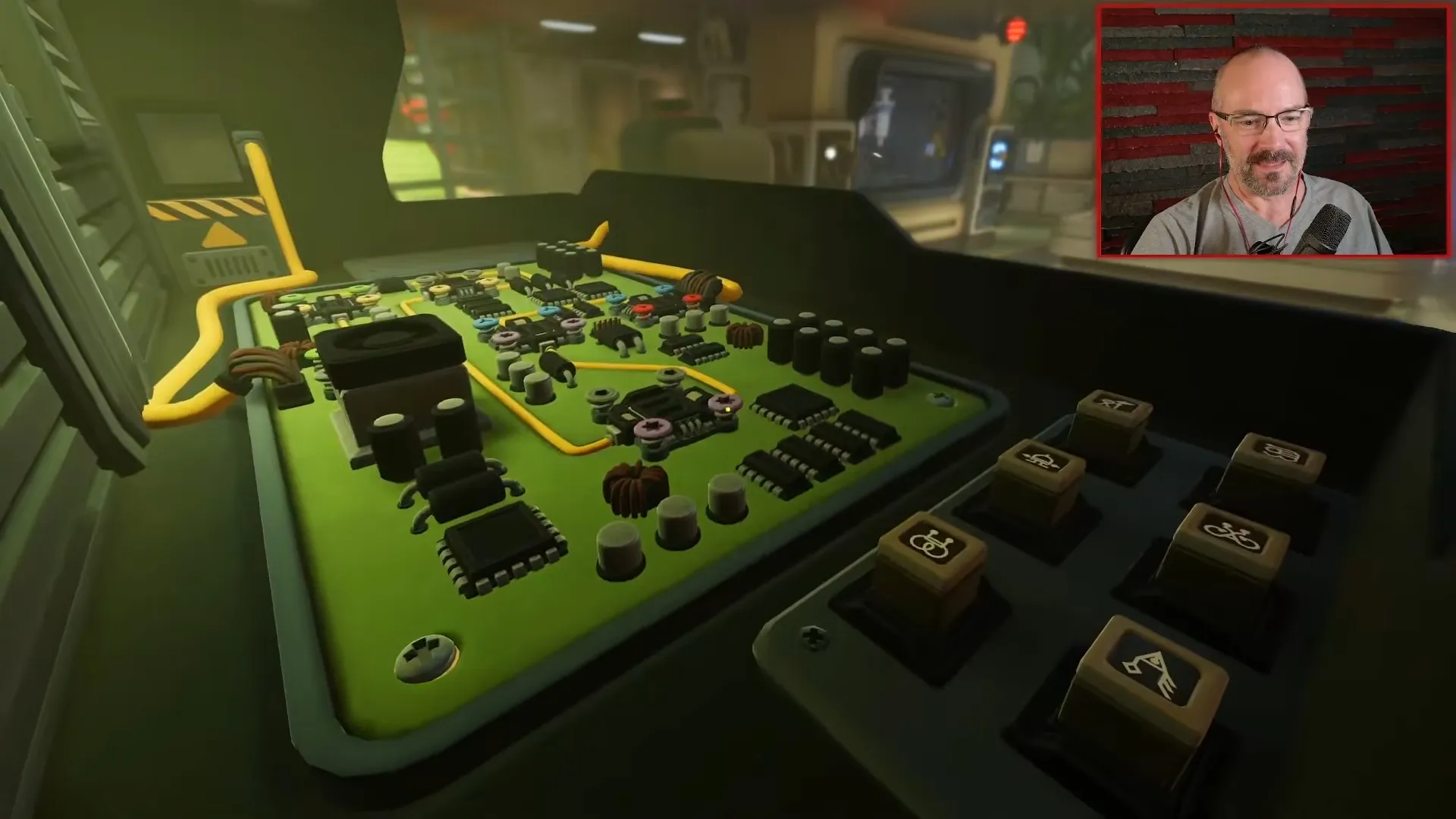
Inside the board, you can see the socket symbols that you need to describe to your partner.
Shown at 37:23 in Tango Tek2’s video.The full-size player stays outside to read the reference monitor. It pairs each of the six illustrations with three small shapes, while each socket inside has two shape types repeated around its four corners.
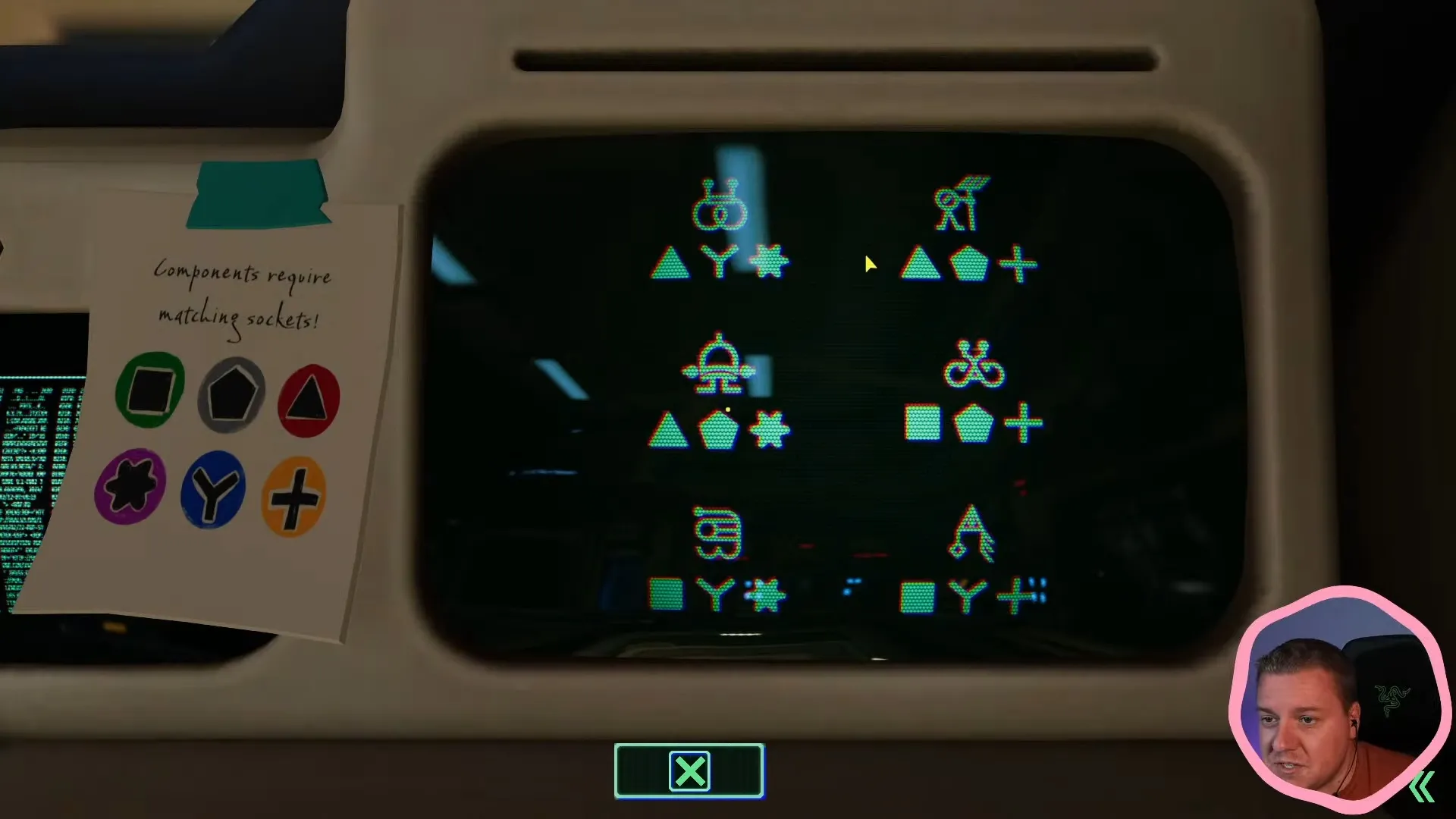
The monitor beside the board shows the component illustrations with three shape symbols beneath each.
Shown at 40:27 in ZedaphPlays’s video.Where do the Research and Development six components go?
Place each illustration in the socket with the shape pair listed below.
| Socket shapes | Component to place (shapes shown under it on the monitor) | Where it sits on the monitor |
|---|---|---|
| Triangle + Y | Triangle, Y, star | Top left |
| Pentagon + plus | Triangle, pentagon, plus | Top right |
| Star + pentagon | Triangle, pentagon, star | Middle left |
| Square + pentagon | Square, pentagon, plus | Middle right |
| Y + star | Square, Y, star | Bottom left |
| Plus + square | Square, Y, plus | Bottom right |
Find each component by the three shapes printed under its picture, not by what the picture looks like. Only two of those three shapes have to match the socket.
The component with square, Y and star goes in Y + star. Match by the three shapes under the picture, not by the picture.
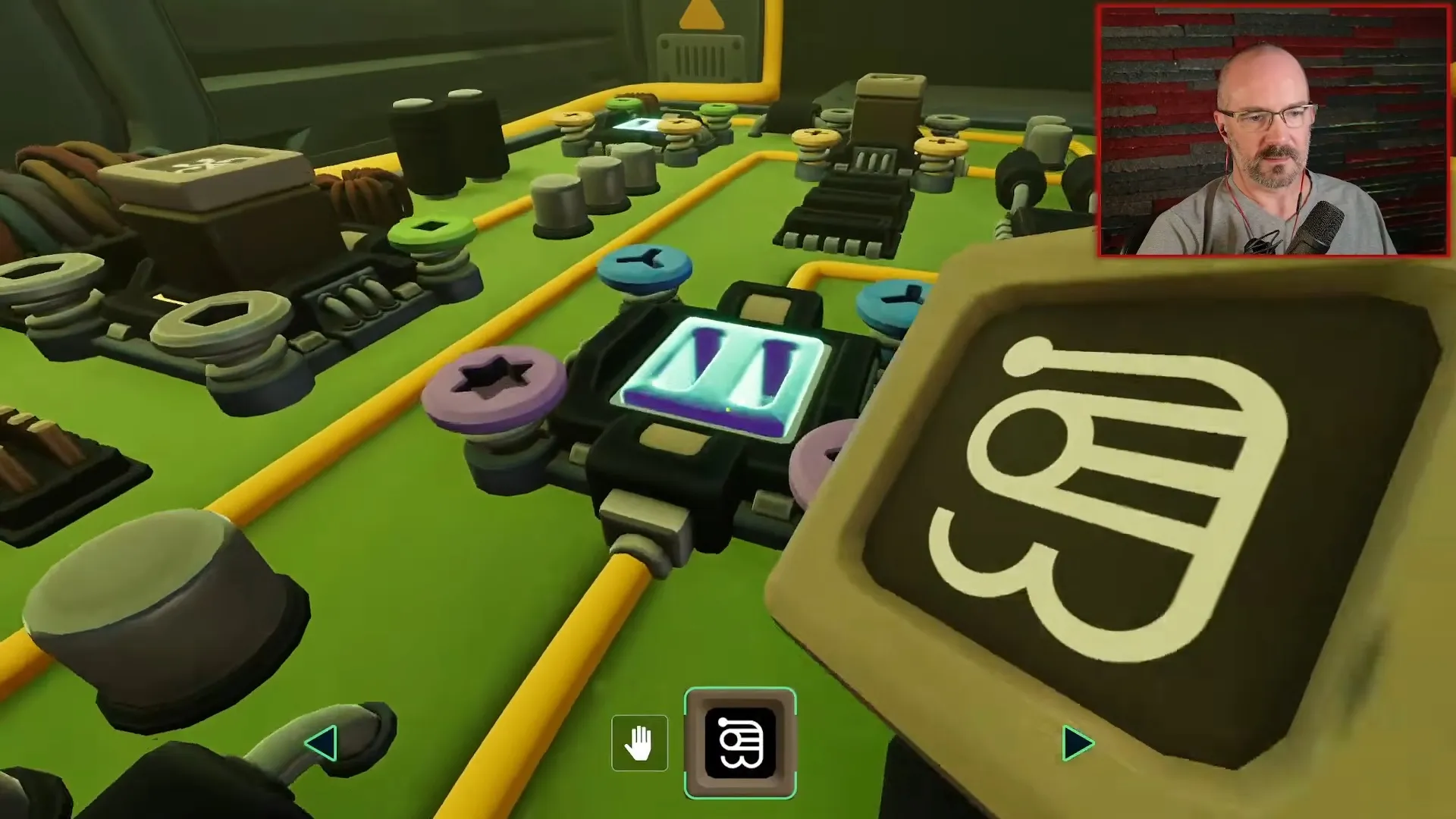
You place the square, Y, star component inside the board for the Y-and-star match.
Shown at 52:19 in Tango Tek2’s video.The component with square, Y and plus goes in plus + square, which leaves square, pentagon and plus for square + pentagon.
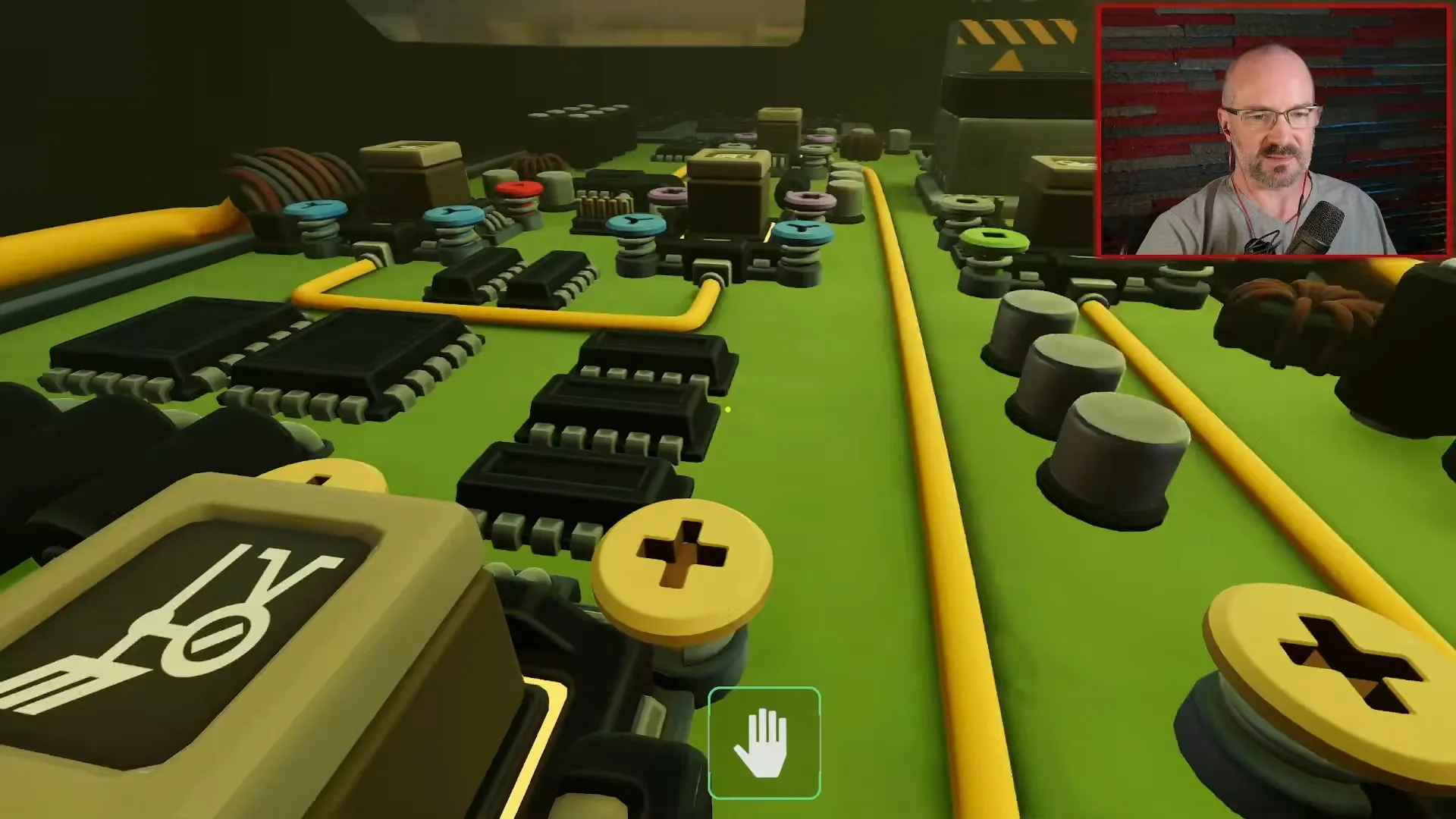
Each socket is marked by the screw shapes around it. This one has plus-shaped screws, so only a component with a plus under its picture fits.
Shown at 52:29 in Tango Tek2’s video.How do Research and Development matching sockets work when two components fit?
Fill the sockets with unique matches first, then remove those components from consideration elsewhere.
- Triangle + Y takes the triangle, Y, star component. Y + star also fits it, so settle the other sockets first.
- Star + pentagon takes the triangle, pentagon, star component, the only one with a star and a pentagon together and no square.
- Pentagon + plus takes the triangle, pentagon, plus component, the only one with a triangle and a plus.
- Square + pentagon takes the square, pentagon, plus component, since the triangle, pentagon, plus component is already used.
- Finish Y + star with the square, Y, star component and plus + square with the square, Y, plus component.
Calling out the two socket shapes is enough for your partner to compare candidates. You do not need to invent an extra rule to connect the illustrations along the yellow wire.
A socket needs both of its indicated shape types among the component's three monitor symbols. It does not need the third symbol, and that leftover symbol does not decide which component goes next along the yellow wire. If two illustrations fit, leave the choice open until another socket uses one of them.
Why is this called the circuit board puzzle, six components, or matching sockets?
These names describe different parts of the same Research and Development puzzle.
- Research and Development circuit board puzzle: you enter the board as the shrunken player and place components inside it.
- Research and Development six components: you handle the six illustrated pieces shown on the outside monitor.
- Research and Development matching sockets: you compare the monitor's component symbols with the shape pairs on the sockets.
Once the components are in their matching sockets, have the outside player press the external test button. The completed circuit opens the door so you can go through. Continue with the 3D resin recipe puzzle for the next puzzle solution.